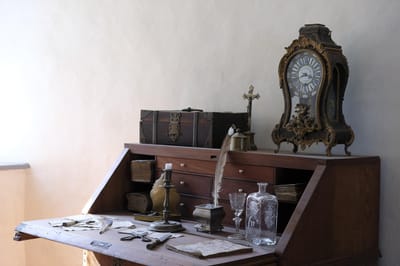
The Clockmaker, Chapter One: The Clock That Ran Backwards
On the first wet day of October, a stranger leaves a clock on the counter and will not give his name.
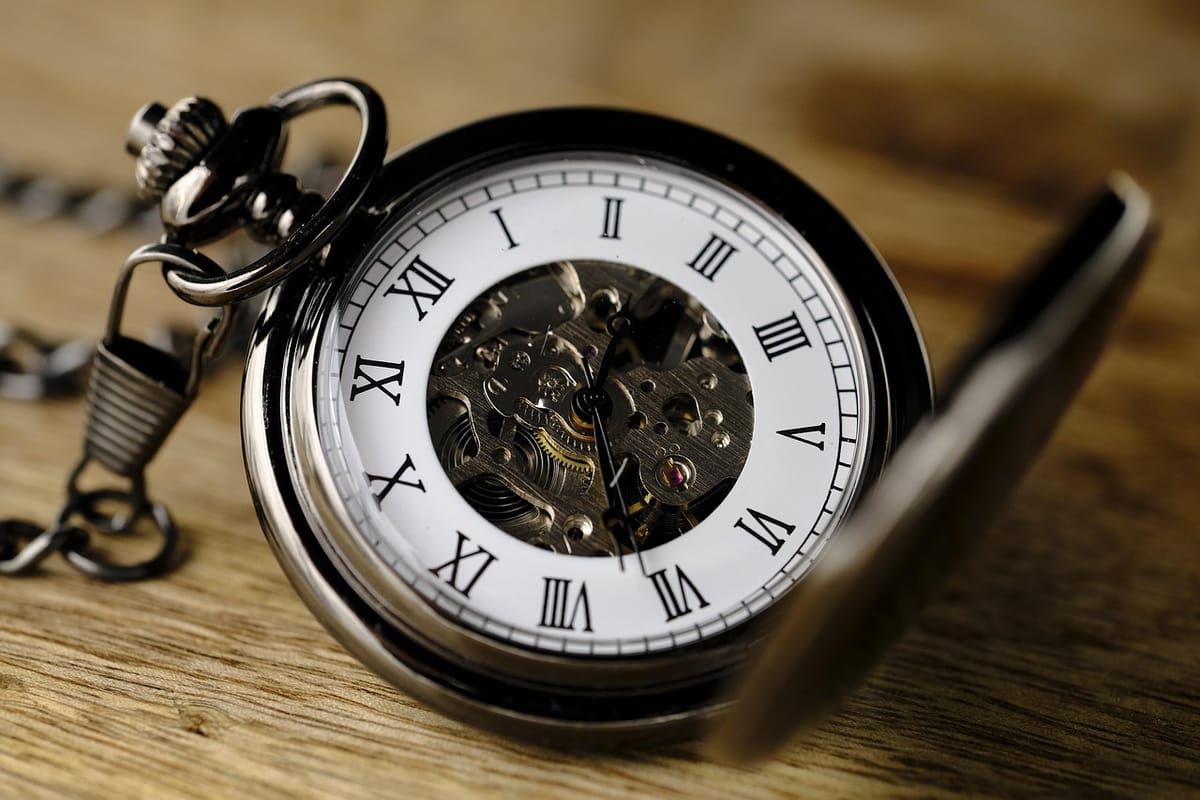
The clock came to the shop on the first wet day of October, carried in by a man who would not give his name.
Ottilie Brand was alone behind the counter. Her grandfather had gone up to bed at four, as he did every afternoon now, and he had left her with a list of small jobs: a mantel clock to oil, a wristwatch strap to change, the window to dust. She was sixteen and she had worked in the shop on Aurel Street since she was nine. She could take a movement apart with her eyes closed. She could not, it turned out, say no to a stranger.
"It needs looking at," the man said. He set the clock on the counter. It was the size of a loaf of bread, in a case of black wood, with a white face and no maker's name. "It runs," he said. "But not the right way."
She turned it towards the lamp. The second hand was moving. It was moving backwards.
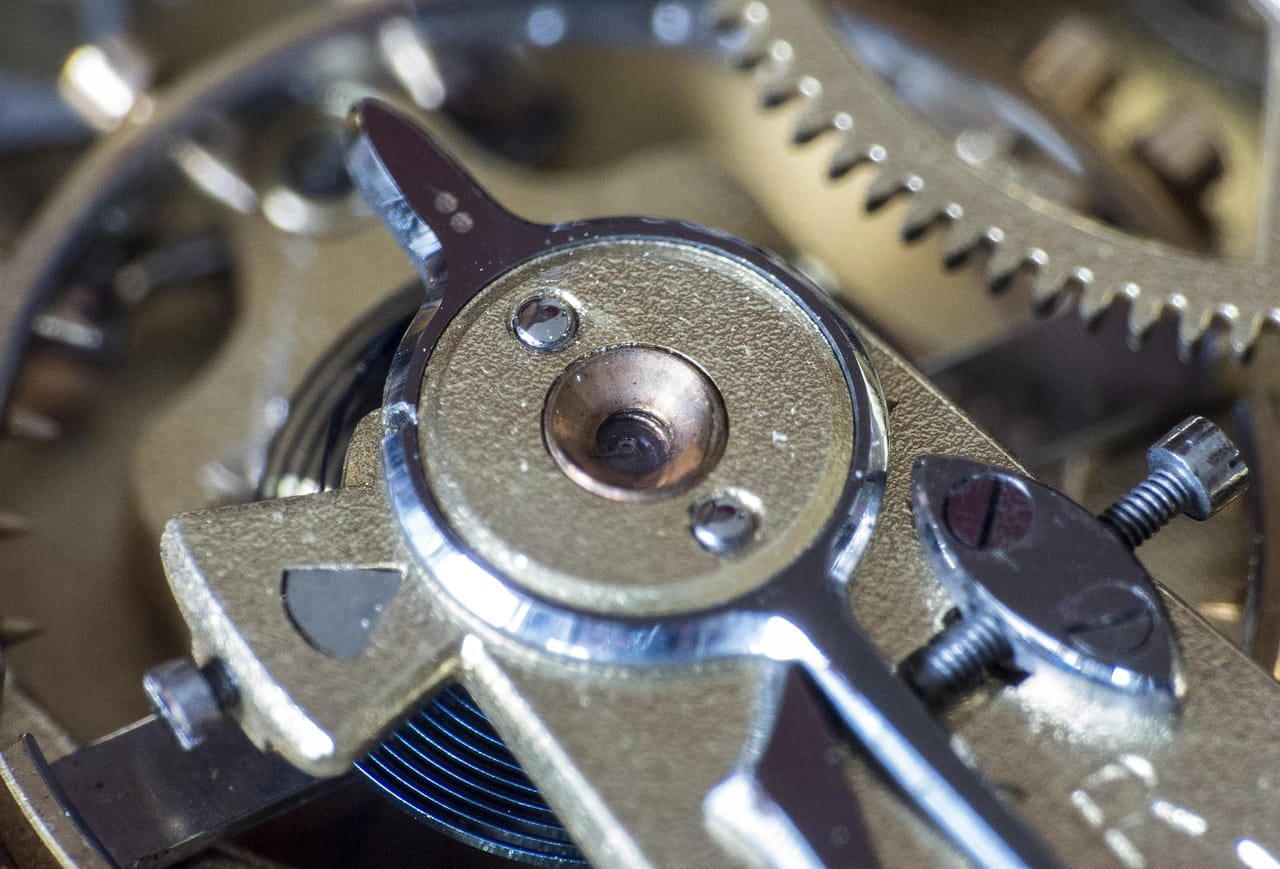
"A novelty," she said. "Someone reversed the escapement. It is a party trick. Grandfather has one in the back."
"It is not a trick." The man did not smile. He looked at the clock the way people look at a dog that has bitten them once. "Keep it until it stops. Then send word." He put a card on the counter. It had an address on the far bank of the river and nothing else.
"We don't take clocks without a name," Ottilie said, but the bell above the door was already ringing, and the street outside was grey with rain and empty.
She opened the case that evening, after supper, at the bench under the window. Her grandfather was asleep. The house was quiet except for the forty-one clocks on the walls of the shop, which never agreed with one another and never would.
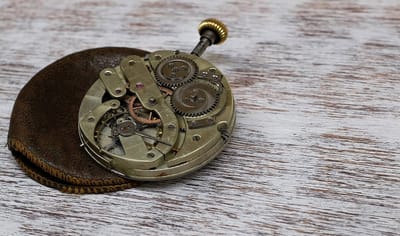
The movement was brass and very clean. It had been made by hand, and well. There was nothing reversed about it. Every wheel turned the way a wheel should turn, and still, on the face, the hands went the wrong way round. She watched the minute hand slip back from twenty to eight to nineteen minutes to eight. She checked the train of wheels three times. She took out the loupe and checked a fourth.
At a quarter to nine, she noticed the second thing.
The clock was not only going backwards. It was going backwards towards something. When she had first looked at it, in the shop, it had said a few minutes past eleven. Now it said seven forty. It was losing exactly one minute for every minute that passed. Which meant, she worked out on the back of an envelope, that in a little less than two days, both clocks would meet: the ordinary time on the wall and the time on this black-cased thing. They would meet at seven minutes past midnight on Thursday.
"And then what?" she said out loud, to nobody.
Every clock is a promise that the next minute will be like the last one.
Anselm Brand, clockmaker, Aurel Street
Her grandfather used to say that. He said it about cheap clocks that lied and dear clocks that did not. She had always thought it was a sentence about clocks.
In the morning, she told him. She had meant not to. He was eighty-three and his hands shook now, and the doctor had said that surprises were not good for his heart. But he came down at seven, in his cardigan, and stood at the bench, and saw the clock, and she watched the colour leave his face.
"Where did you get that?"
She told him about the man and the card. He picked up the card and turned it over, as she had, and read the address on the far bank, and put it down very carefully, as if it might break.
"I made this," he said.

She laughed, because it was absurd, and then she stopped laughing. He had lifted the dial off its feet and was showing her the back of it. There, in small letters scratched into the brass with a point, were two initials and a year. A.B. 1961.
"I was twenty," he said. "I made it for a woman who asked me to. She paid me in advance and never came back for it. I thought it was lost." He sat down on the stool, slowly. "Ottilie. It was never meant to run."
"But it does."
"Yes," he said. "I can see that it does."
He did not say anything else about it all day. He served customers. He ate his soup at one. He went up to bed at four, as always. But when she brought him his tea at five, the door was locked, and through it she could hear him winding something, over and over, like a man trying to catch up.
On the bench downstairs, the black clock said six fifteen, and it was going the wrong way, and it was on time.