Salt Road, Part One: The Ferry
A dead man’s truck, a tin box on the passenger seat and a boy with a sign that says FAROS.
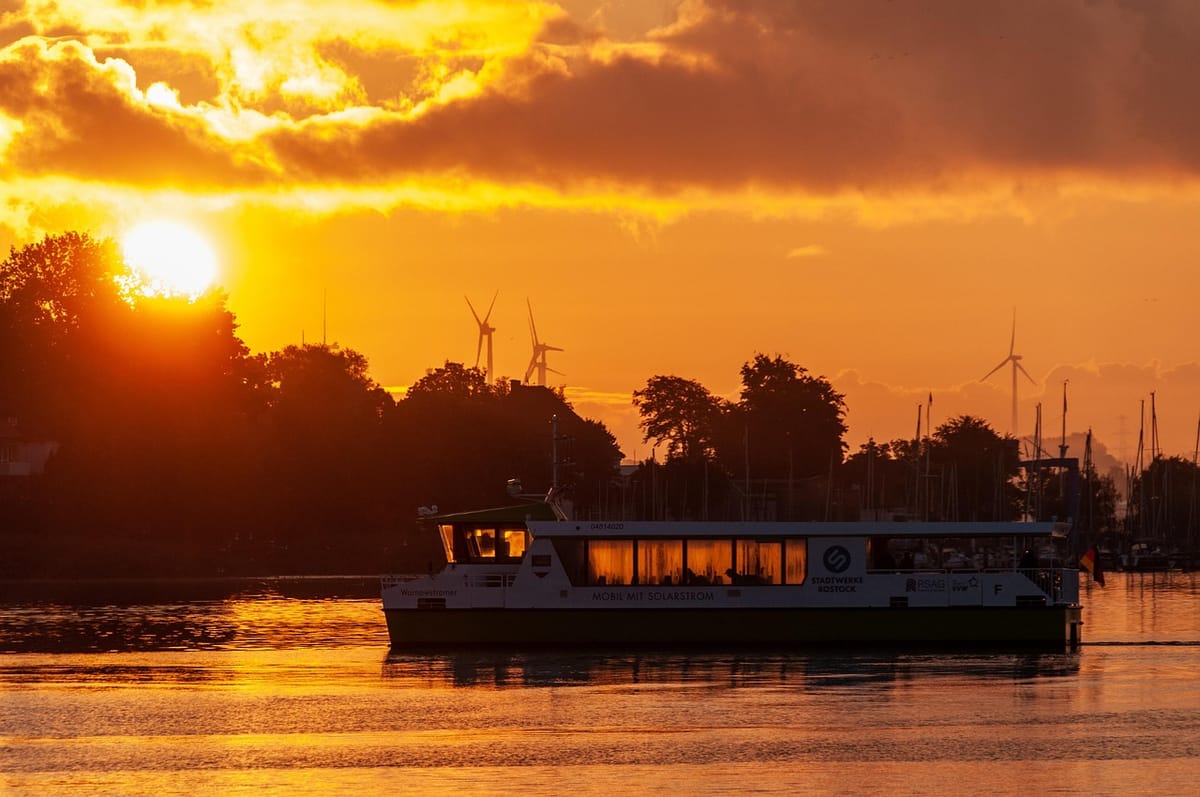
The ferry left the mainland at six in the morning, and Nora Vidal was the only passenger with a truck.
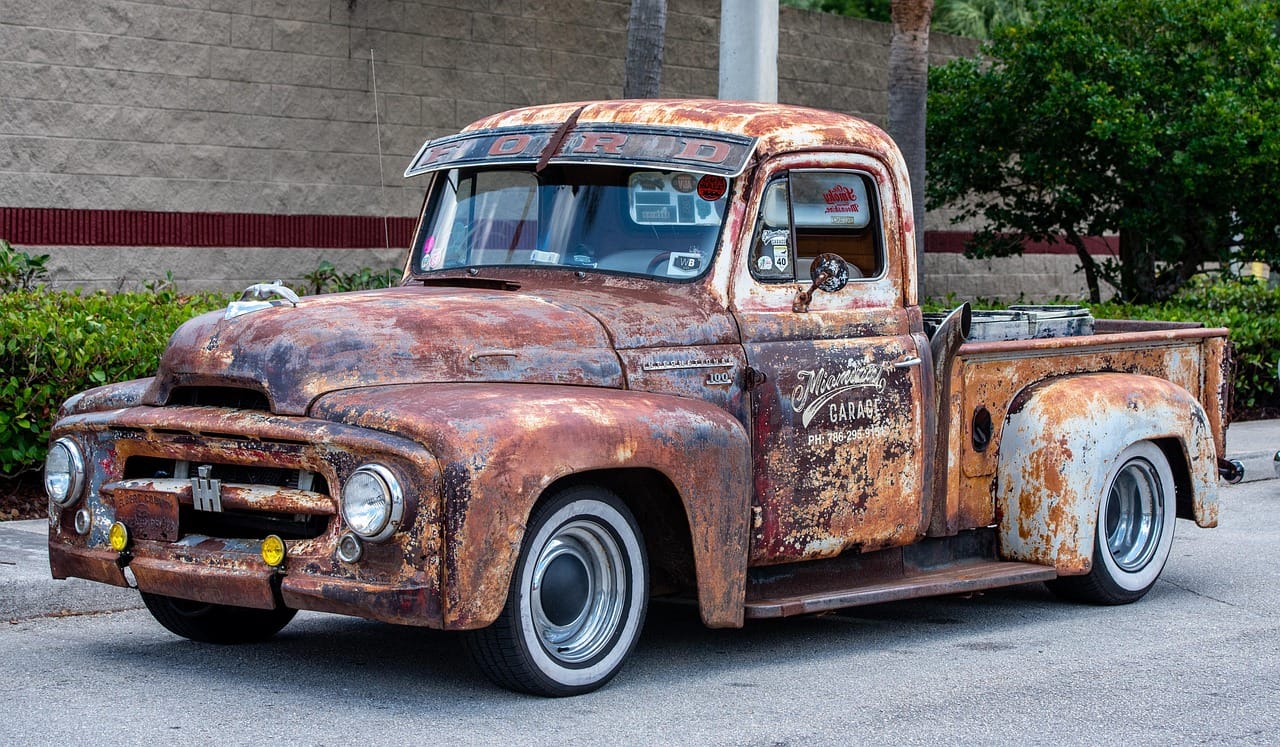
It was her father's truck. A 1978 pickup, pale blue once, now the colour of a faded postcard, with two hundred and eleven thousand miles on the dial and a passenger door that opened only from the outside. The ferryman looked at it the way people look at an old dog walking on three legs. Then he waved her on without charging her for the vehicle.
"Where you headed?"
"The end of the salt road," she said.
He nodded as if that were a normal thing to say. Perhaps on this coast it was. "Long way," he said. "Fill up in Marisma. There's nothing after."
The crossing took three hours. Nora stood at the rail for most of it and watched the mainland go grey and then go altogether. On the seat of the truck, belted in like a passenger, was a tin box the size of a shoebox. She had not looked at it since she put it there.
Her father had driven the salt road every summer of her childhood. Four hundred miles of gravel across the flats, from the ferry port at Marisma to a village on the far coast called Los Faros, where the road stopped because there was nothing else to reach. He had gone for work at first, carrying supplies for the salt company. Later, when the company closed, he kept going. He never explained why. Every July he loaded the truck with water and spare tyres and drove away for nine days, and every July her mother said nothing, and Nora, at twelve, at fifteen, at twenty, decided she did not care.
In March, he died. In the kitchen, between one cup of coffee and the next. In his will, which was one handwritten page, there was a single instruction for her: Take me to Los Faros. Use the truck. Do not fly.
She was thirty-four. She had not spoken to him properly in six years. She had come anyway.
What she remembered of him was mostly his absence. A chair at the kitchen table that stayed pushed in for nine days every July. A postcard, some years, with a picture of a lighthouse and three words on the back: All well. A. The smell of the truck when he came home, diesel and dust and something else, something green, that she could never name. He would come in at night, grey to the eyebrows with salt, and stand in the doorway of her room without turning on the light, and she would pretend to be asleep. She had pretended for years. She did not know, now, whether he had known.
When she was sixteen, she asked to go with him. He said no. He said the road was not a place for a girl, which made her so angry that she did not speak to him for the rest of that summer. When she was twenty-eight, he asked if she wanted to come. She said she was busy. She was not busy. She wanted him to know what it felt like.
In Marisma, a boy of about nineteen was sitting on a rucksack outside the petrol station with a cardboard sign that said FAROS.
She did not stop. She filled the tank and two jerry cans and bought water and bread and a bag of oranges, and when she came out, he was standing next to the truck, reading the dial through the window.
"Two hundred and eleven thousand," he said. "That's a good truck."
"It's a terrible truck."
"It got this far." He shrugged. "Nobody else is going to Los Faros this week. I asked everyone. I can change a tyre. I don't talk much." He paused. "That last part's not true. But I can change a tyre."
Every road is an argument between where you are and where you think you ought to be.
Tomás Reyes
She looked at the road leaving town. It went straight, white and pale, into a white and pale horizon, and the sky above it was so large and so empty that it seemed to press down on the roofs.
She thought about saying no. She thought about the four hundred miles and the tin box and the particular silence she had been saving for them, the silence she had imagined all the way from the city: just her and the road and whatever her father had left out there for her to find. She had not planned on company. She had not planned, if she was honest, on anything at all after the ferry.
"Why Los Faros?" she said.
"Family business," said Teo. He did not explain, and she found that she liked him for that.
"You'll have to open your door from the outside," she said.
His name was Teo. He opened the door from the outside, climbed in, saw the tin box on the seat, and without a word, without asking, moved it carefully onto his lap and held it there with both hands, the way you would hold something that mattered.
She started the engine. The truck coughed twice and caught.
"Is that him?" Teo said, after the last house was behind them.
"Yes."
"What was he like?"
Nora watched the road for a long time. The gravel hissed under the tyres. Far ahead, the heat was already making the horizon shake.
"I don't know," she said. "That's why I'm driving."